
A few weeks ago, I had an echocardiogram—which is an imaging test that uses ultrasound waves to create detailed images of the heart. I have had several in the past, but this time was different—I was facing the machine that displays the images of my heart. As I lay there, I could see the technician typing away on the controls while different areas of my heart appeared on the screen. After about fifteen minutes I noticed she was highlighting an area on the monitor. I asked her what she was measuring. She said, “The left atrium.” A few moments later, she highlighted a larger area. Again, I asked what she was measuring. She said, “The left ventricle.” There were red and blue areas and I asked what those were. “They show the blood flow,” she replied. It was fascinating. I told her I would have read about the test and images beforehand if I had known I would be able to see them.
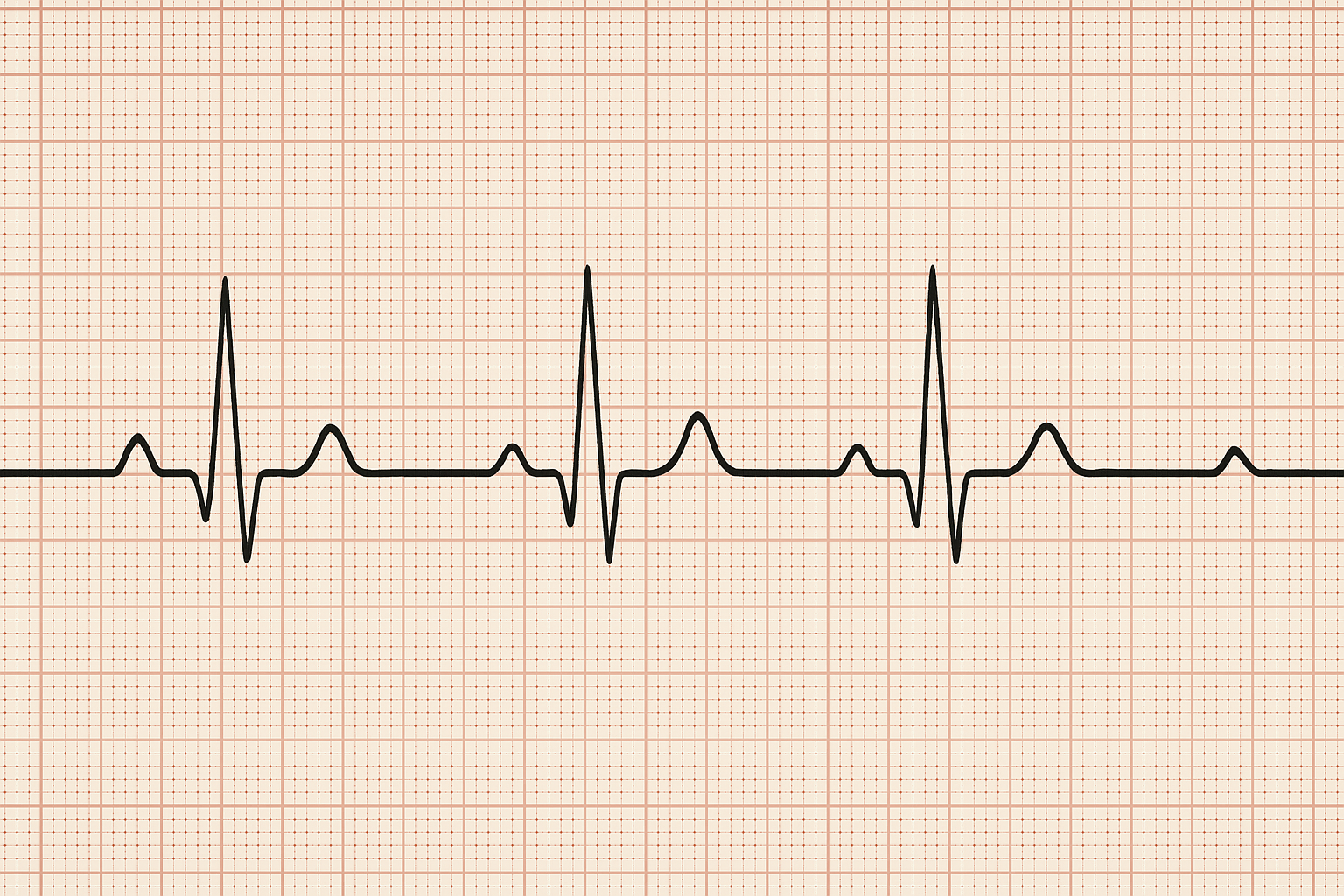
The image that made the biggest impression on me was the line that shows the heartbeat. In real time I was watching my heartbeat—the sign that I am alive. As she changed views on the screen, my heart continued in its regular, rhythmic pattern. I was asked to breathe and hold my breath . . . my heart continued as before.
It occurred to me that I was alive because my heart was beating. (This may seem obvious, yet it struck me with new clarity.) As I lay there various thoughts raced through my mind. If my heart stopped, I would not be alive. It seemed to have a mission of its own—to beat and keep me alive. It didn’t matter what was going on around me. There it was—this mechanical marvel of a muscle doing its job. As I watched, I felt more alive than ever.
Witnessing a Miracle
After I left the clinic, the images stayed with me—and I began to learn more about this organ I had just watched in awe. I learned later that the heart beats nearly 100,000 times a day, nearly 3 billion times in a long life, without conscious effort or tiring out. The heart possesses its own internal electrical system (sinoatrial node) that triggers each beat. This happens independently of the brain and is a built-in safety mechanism.
The miracle of a heart lies in the sheer complexity, endurance, and autonomous nature of the heart’s function. My heart’s job is to keep me alive. As I watched, I realized even if I do nothing, my heart beats. Whether I cry, give up hope. sink into despair, or feel joy—my heart beats.
This experience of seeing my heartbeat was a tangible connection to the inner workings and rhythms of my own existence. My life is a miracle. Every moment is made possible by my heart. When I look at other people, I imagine their heart beating. They, too, are wanting to live—just like me.
My Mission
My mission became clear: to live each day realizing the miracle of my existence—and to make every moment worthy of my heart which works continually to keep me alive. I can’t take for granted how many heartbeats I will have. As Neil Armstrong once said:
I believe every human has a finite number of heartbeats. I don’t intend to waste any of mine.
— Neil Armstrong (1930-2012) American astronaut and aeronautical engineer who, as the commander of the 1969 Apollo 11 mission, became the first person to walk on the moon
So I won’t waste my heartbeats either—not a single one.






Leave a Reply
Your email is safe with us.